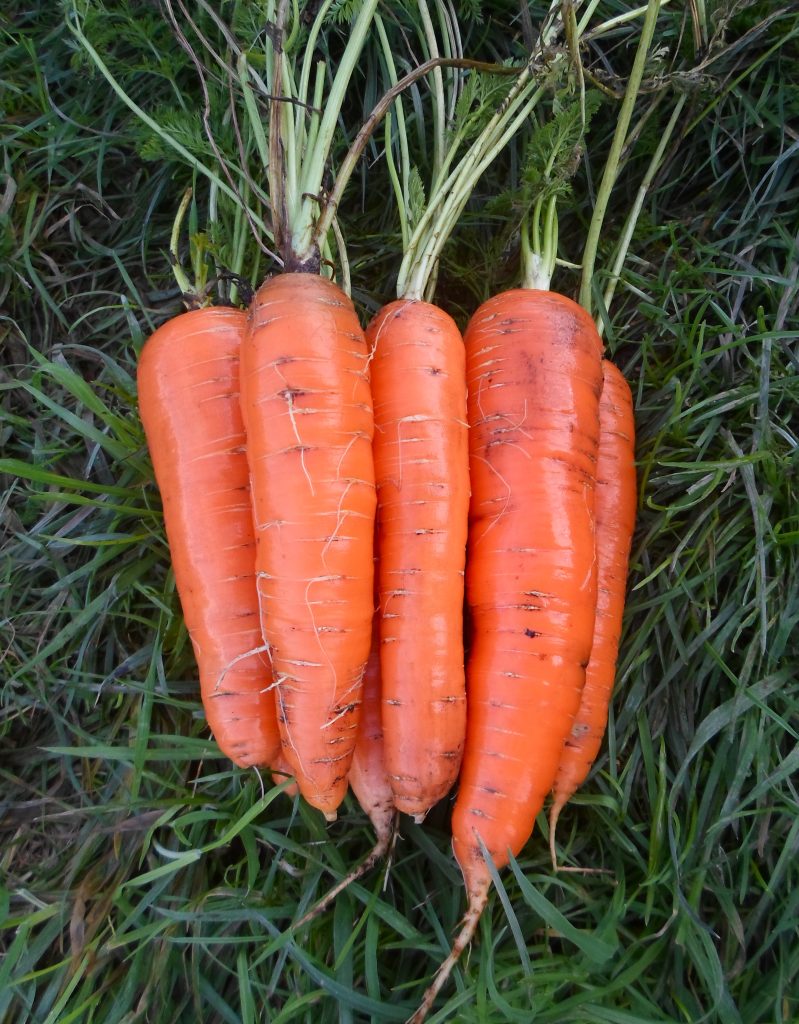
Carrots grow best in well drained, fine, stone free soil, enabling them to produce a nice, straight, uniform root, so you may need to do a bit of bed prep before-hand to get the best results. Here in Wales a lot of the soil is quite heavy clay, so you might be better off choosing a shorter, stumpier variety. They also prefer full sun, and a fertile, but not overly rich or recently manured soil, otherwise they’ll become ‘forky’.
Carrots don’t like their roots being disturbed when they’re small, so are best sown outdoors in situ from April to July. Make a shallow drill, about ½” deep, then sprinkle in the seed as thinly as you can. Lightly cover with fine soil and water in. New shoots are very susceptible to slugs and snails, so you might need to protect them, and you’ll need to be patient as the seeds can take a while to germinate, especially if you’ve sown them early.
Keep them weed free, and gradually thin out the seedlings as they grow, to approx. 3” apart and water regularly throughout the season.
Your biggest issue will probably be carrot root fly, the larvae of which like to burrow into the carrot, making a large proportion of it inedible. The adult fly is attracted by the smell of the carrot, which is particularly strong when you damage the leaves. Make sure you sow them thinly to avoid lots of thinning, and when you do thin or harvest, try not to damage the leaves. You could use a physical barrier, such as fleece or net, or try growing a strong smelling crop around the carrots, such as something from the allium family, to help disguise the smell.
Carrots can be sown successionally throughout the season for an ongoing crop, and harvested when they’re big enough to eat. Depending on the variety, they’ll happily stay in the ground all the way into winter. However, if you have particularly harsh winters, or rodents are a problem, many varieties of carrot now store well, so you can lift them all at once and store in a box of compost or sandy soil in a cold, dark place such as a garden shed.